Wednesday, May 12, 2010


Friday, April 16, 2010
flicks around town

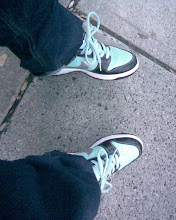
a night walk to the studio and a day around the new haven streets, freshly uploaded to flickr.

Thursday, April 15, 2010


Monday, April 12, 2010
pressin coverage
I'm going to buy a camera.
This weekend i was covering the trinity international hip-hop festival (big ups to magee & ben, kosha dillz, flex mathews, self-suffice, and a special shout out to jamnopeanut for the space to crash) and i realized two very important things:
(1) in some circles - of as-of-yet undiscerned radius - "I'm a blogger" serves as a credible shibboleth. this weekend marked the first point at which I realized that my stringing together a couple of words here and there on the internets actually means something to someone not related to me (hi mom). in this world of hyperattenuated attention spans, the blogs are the go-to media incarnation.
thus embodied, my digital voice translates into physical form, an even tangible perk. or so it felt as I fingered the press pass hanging around my neck, stretching out to push my voice recorder (read: cell phone) a foot away from KRS-One.
Chilling with the Blastmaster behind closed doors because it's 2010 and the blogs is watching.
(2) if you have a camera (particularly in conjunction with a press pass - see the first point), you can do some real wild things that would otherwise be thoroughly gauche. at one point, my cameraman/bboy was up to battle, and so he passed me the camera for an hour or two. within 15 minutes, i found myself kneeling, craning, and instinctively pushing to the front of crowds, knowing that the camera i held was enough to grant me respected access to the attendant goings-on.
Wielding that power authoritatively - confidently - allowed me to interface with people around me in new ways. Strangers who might otherwise give me the ice grill would hear - hey, can i get a picture for the website? - and subsequently pose, shuffle about, even contort themselves to allow my gaze to fall upon them. i felt like Buscape' in City of God - the ultimate observer-participant, caught up in the front lines but set apart, objective, even judgmental - granted the decision of selecting those sufficiently noteworthy to rate the camera's flash.
and that judgment could be used foolishly or with discernment: i discovered how easily i took to being invasive, inhuman as i "went for the shot". but then, the next moment, the camera might become a tool for unity - joy, even - collecting groups of mutual strangers and binding them together - eternally in that moment - with the honesty of the flash, the revealing, recording, light. discernment.
things looked different through the glass eye. midway through the bboy battle, when the camera's batteries finally ran down, i realized that i had been missing the flow of the dance almost in its entirety. obsessed with capturing a clever, well-framed, energetic glimpse, i had forgotten the movement - drama - action of the dance. the very geist i had been seeking to exemplify, i had missed. foolishness.
paparazzi.
Monday, March 29, 2010
Kosha Dillz remix contest winner
The homeboy Kosha Dillz (a/k/a the flyest guy to the goyim), who I linked up with when I interviewed him for Nomadic Wax, had a contest co-sponsored by lifestyle heavyweight DQM and the Diamond Music Group to remix the last single from his album Beverly Dillz.
"Cellular Phone" has been getting some good buzz around indie circles, and now GMJ's remix won the Kosha X DQM X DMG remix contest. Big ups to the winner - I just listened to the track, and I gotta say that its pretty fly. As much as the original production fit smoothly into the aesthetic of the whole album, the remix is a great standalone track. Check it out.
And the Cellular Phone music vid:
Find more videos like this on ThisIs50.com

Thursday, March 4, 2010
popularity
There are two contrasting - though perhaps not mutually exclusive - arguments for the usefulness of popularity of X (X here can be anything - food, media, game, meme, etc. - consumed by an audience) as a metric of X's quality to which I subscribe:
I) In order for X to appeal to a sufficiently large population (arbitrarily, say n+1, where n is the size of the largest identifiable subcultural group), certain characteristics of X that would make it appealing to a certain subcultural group, but not to others, must be removed - it must be "watered down". Therefore, the more popular X is, the more watered-down it must be: the most popular rap music is going to be less edgy and authentic than more niche-targeted rap music, more popular movies are generally going to be more blandly generic than movies which were produced with no popular success in mind, etc. This is the broad appeal effect.
II) In order for X to achieve mass popularity, there must be some factor present within X that appeals to a broad population. The fact that it is so universally accepted means that the producers of X did something right - hit on some key factor, some deeply satisfying foundation of human experience - that allows it to have such broad-spectrum appeal. My friend Jason Latshaw argues as such in his blog, It's Show Business, Not Show Preference on Avatar's success amidst in-group disapproval. This is the universal factor argument.
In short: the broad appeal effect drives down the quality of any product X which is targeted to appeal to the largest audience possible, while the universal factor argument claims that any X which appeals to a sufficiently large audience has inherent in that appeal some factor of great value/quality.
I don't know how to resolve these - but I think they do go hand-in-hand in the wild. After all, while a case might be made for Soulja Boy as aesthetically transcendent auteur, those who can subscribe to such an argument without a wink and a nod are arrestingly few, as they ought to be. But at the same time, most of what captures the attention of so many must have some sort of genuine appeal; and one hopes that the universal skein threading together the thoughts of so many is not the superficial, but rather the deep, genuine, true.
Perhaps the two can be reconciled according to lines similar to these: authenticity must be paramount. That is to say: appealing broadly and seeking to appeal broadly are two separate beasts. To appeal broadly, one must strike an authentic chord with the audience - but authenticity, as with happiness and passion, is best sought by not setting out to seek it, but instead losing oneself in the pursuit of something noble. The broad appeal effect applies to media produced in a conscious effort to find broad appeal; but the universal factor argument obtains for media that finds that universal element - a key foundation of which is that it is produced genuinely, and not self-consciously ("self-conscious" here meaning created to serve a second-level aim ["to be popular"] rather than a first-level aim ["to be funny/amusing/moving/well-produced"]).
Thursday, February 18, 2010
Visions of New Haven II

[print/paint on cardboard, bus stop, Whalley Avenue.]
Photoblog making its reappearance soon.